The short answer
Yes, if the scaffold is high enough. In the ACT, erecting, altering or dismantling a scaffold from which a person or object could fall more than 4 metres needs a high risk work licence. Below 4 metres a licence is generally not required, according to Safe Work Australia, although there are exceptions. The licence is held by the person doing the scaffolding work, not by the building owner who hires them. This page explains what that means in everyday terms. For the regulator's own contacts and the class names in more detail, see the ACT licences for scaffolding page. We are a referral service: we pass your enquiry to local licensed scaffolders and do not own scaffolds or do the work.
What the 4 metres actually measures
The number is not the height of the building. The model WHS regulation defines scaffolding work as erecting, altering or dismantling a temporary structure from which "a person or object could fall more than 4 metres from the platform or the structure". The fall is measured from where a person or object could fall, which is the platform they are working on or the edge of the structure. A scaffold with a top deck well under 4 metres is likely to be under the line, and one with a deck above 4 metres is over it, even if the building is only a house. Close to the line, the scaffolder decides.
The second storey of a house is often close to the line. WorkSafe ACT's April 2023 alert followed a fall of 4.2 metres from a second storey on a residential site, and said scaffolding over 4 metres may be erected, altered or dismantled only by a licensed, competent person. Your scaffolder decides how your job measures up. If a quote does not say whether any part of the scaffold is over 4 metres, ask.
SB, SI and SA in plain terms
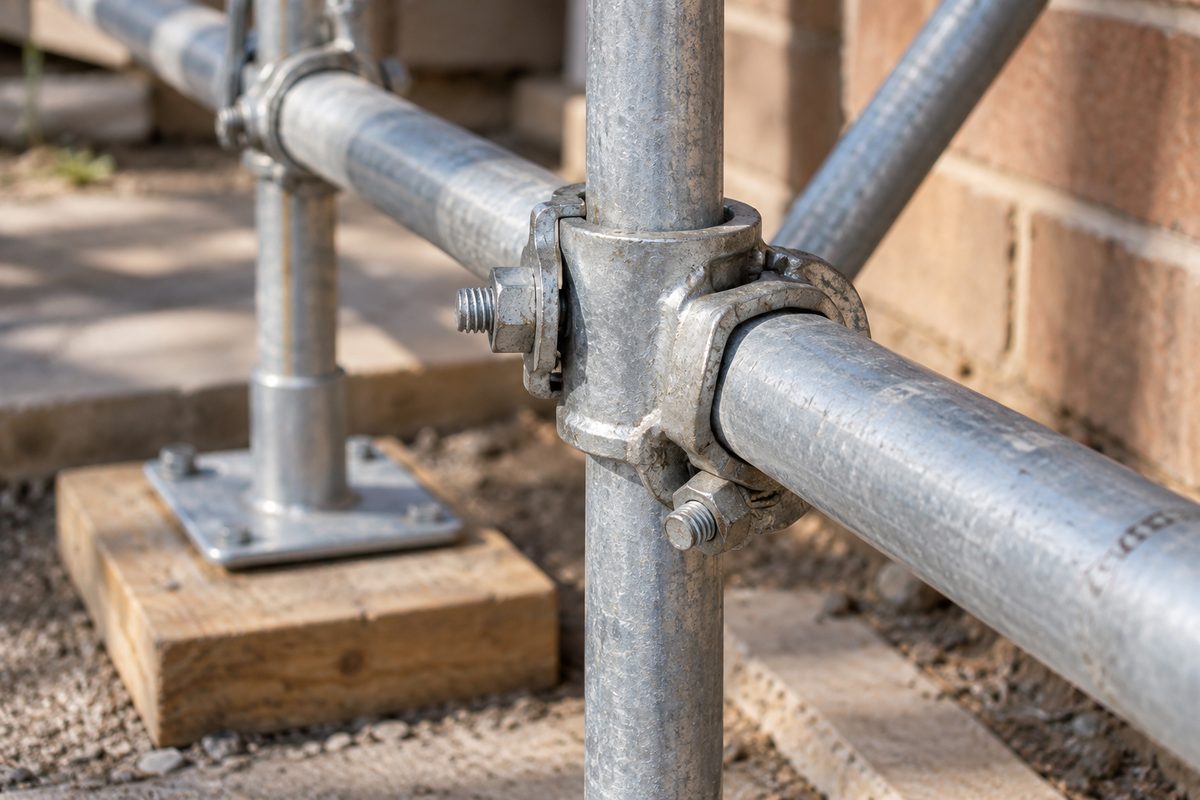
The ACT regulator for licences is Access Canberra, and it lists three scaffolding classes: Basic scaffolding (SB), Intermediate scaffolding (SI) and Advanced scaffolding (SA). The ACT pages do not describe what each class covers, so the scopes below are as SafeWork NSW describes them, since NSW uses the same national class names and codes.
| Class | In plain terms | What it covers |
|---|---|---|
| SB | The entry class | Modular and prefabricated scaffolds, cantilevered materials hoists up to 500 kg, bracket scaffolds |
| SI | Adds tube and coupler | Tube and coupler scaffolds including covered ways and gantries, cantilevered and spurred scaffolds, perimeter safety screens and shutters, mast climbers |
| SA | Adds hung and suspended | Cantilevered hoists, hung scaffolds and suspended scaffolds |
Each class adds to the one before it as the regulators describe them, but ask the scaffolder which class applies to your job. Modular steel, which operators often call Kwikstage, falls under SB as SafeWork NSW describes it. Trestle scaffolds generally do not require a licensed scaffolder. For a plain list of the types, see the types of scaffolding page.
When no licence is needed, and when it still is
Safe Work Australia's general guide says a licence is not required where the fall risk is 4 metres or less. Its examples are a small frame scaffold for repairing eaves or painting a ceiling. That is why a low scaffold along a single storey house, or a mobile tower for a shopfront, can often be put up without a high risk work licence. The roof edge and mobile scaffold page covers those.
It does not mean the work is unregulated. Safe Work Australia's tower and mobile sheet says a scaffold under 4 metres can still need a licensed scaffolder if another fall hazard exists, such as beside an excavation. The WHS laws still apply: guardrails, mid-rails and toe boards on working decks, training and supervision, a safe work method statement for trades on or near scaffolds, and inspection. A fall from height is a notifiable incident in the ACT even without injury, reported to WorkSafe ACT on 13 22 81.
How to check a scaffolder's licence
Most local scaffolders do not publish licence numbers on their websites, so you will usually need to ask. Ask for the licence number, the class and the issuing authority, and ask to see the card. Then check it with Access Canberra (Construction and Workplace Licensing, [email protected], 02 6207 8096). A high risk work licence issued by another state or territory is recognised in the ACT, so a NSW licence is valid here, but check the issuing authority.
Access Canberra also notes exemptions: trainees supervised by a licensed person, and applicants awaiting a decision. So a trainee may be on site under supervision. It is worth asking who the licensed person is and whether they will be on the job. The ACT construction licences page lists builders, electricians, plumbers and other trades, and does not mention scaffolding, so as far as that page shows, scaffolding is regulated through high risk work licences rather than a separate trade licence.
Queanbeyan and the border
Queanbeyan is in New South Wales, where SafeWork NSW (13 10 50) is the regulator. It uses the same class names, SB, SI and SA, and the same 4 metre definition. A high risk work licence from the ACT is recognised in NSW and a NSW licence is recognised in the ACT, so the licence rule is the same on both sides. What differs is the regulator and the authority for road and footpath permits, which in Queanbeyan is Queanbeyan-Palerang Regional Council. The border page goes through it.
What the rest of the law adds
WorkSafe ACT says the WHS Act gives duties to designers, scaffolding contractors, workers and, on projects of $250,000 or more, principal contractors. The scaffolding must meet AS 1576. WorkSafe ACT audited 26 sites in 2017 and found compliance ranging from 58% to 89%, with notices issued. That audit is history, not a current statistic, but it shows why owners should ask questions. After the scaffold goes up, inspections matter: before first use, after a severe storm, after repairs and at intervals not exceeding 30 days, by a competent person. The inspections page covers that, and the erection page explains who builds the scaffold.
Questions to ask before the scaffold goes up
A short conversation with the scaffolder, before the booking, answers most of what an owner needs to know about licensing. None of these questions is rude, and a competent scaffolder will have answers ready.
- How high is the highest working deck, and is any part of the scaffold over 4 metres?
- What is the licence number and class of the person who will erect it, and who will alter and dismantle it?
- Will a licensed person be on site for the whole build, and who is supervising any trainee?
- Who is the competent person who will inspect it at handover, and will I receive written confirmation and a tag?
- Who will inspect it after a storm, after repairs and at least every 30 days?
- Is there an overhead power line, an excavation or a nature strip that changes the job?
If the answers are vague, or the quote says nothing about licensing, ask again in writing. A scaffolder who cannot say what class of licence the job needs, or who will not give a number, is a reason to get another quote. The cost guide explains why a quote that is much lower than the others for a tall job deserves a second look, and the hire page covers the terms to settle at the same time.
Owners sometimes ask whether the licence is the builder's problem rather than theirs. WorkSafe ACT says the duties sit with designers, scaffolding contractors, workers and principal contractors, and Safe Work Australia says the person with management or control of a scaffold must make sure it is inspected and maintained. On a house, that may be the builder or the owner. Asking the questions above is how you find out whether the right people are doing the right parts.
What a licence guide cannot do
It cannot confirm that a particular scaffolder holds a particular licence, and it cannot tell you whether your scaffold is over 4 metres. It does not show an ACT page that lists the class scopes, so the scopes here are as another regulator describes them. We could not read the ACT regulation text itself, so we describe the rules as WorkSafe ACT and Safe Work Australia state them. Ask Access Canberra to confirm a licence, and ask WorkSafe ACT about your job.
Check the current rules before you rely on this
This page describes in plain language when a scaffolder needs a high risk work licence in the ACT. It describes the rules in general terms as they stood in October 2026. Standards, forms, thresholds and fines change.
The authoritative sources are Access Canberra, high risk work licences, WorkSafe ACT, scaffolding, WorkSafe ACT, scaffolding falls from height alert, Safe Work Australia, guide to scaffolds and scaffolding work, Safe Work Australia, tower and mobile scaffolds information sheet and SafeWork NSW, scaffolding licences. Where anything here differs from those sources, they are right and we are not.
We are not scaffolders, engineers, regulators or lawyers. For what applies to your job, ask the scaffolding contractor, WorkSafe ACT (13 22 81) or, for work on public land, the ACT Government Public Land Use Team.
Accurate at the time of writing, October 2026. Always check the source before relying on it.